


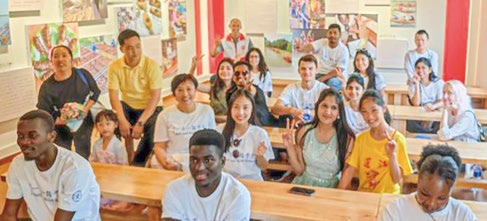
On April 30, 2023, international students from Belt and Road School paid a field visit at Lianjiang Village, which has a history of over 300 years in Lianzhou County, Doumen District, Zhuhai. During the visit, 15 international students from 12 countries (including Pakistan, Bangladesh, Sri Lanka, Mexico, Zambia, Morocco, Ghana, Vietnam and more) participated in a cultural performance under the theme of “Lianzhou Intangible Cultural Heritage Activity in 2023.”
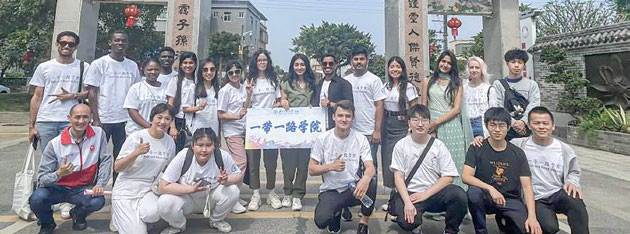
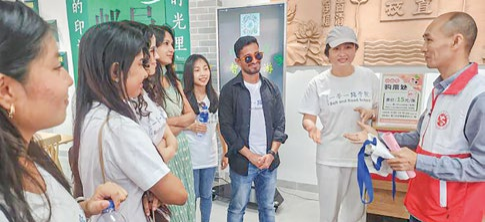
Lianjiang Village, serving as a model of China's rural revitalization of 2022, still keeps its unique customs, and local people are kind and friendly. Accompanied by the leaders of the village, the international students had an engaged talk with local villagers and enjoyed themselves in modest folk style. Besides, they experienced various projects, including the "Farmer's Market." They also witnessed a dragon dance, which is an intangible cultural heritage. In return, some students performed a Bengali dance, which won praise and applause from the local villagers. The performers, Md Rezoan and Romana said, "In here, we had a glimpse of the rapid development of rural China. It can also be seen that the Lianjiang Village is making efforts to create a better life for its villagers through modern techniques, while preserving its distinctive traditions."
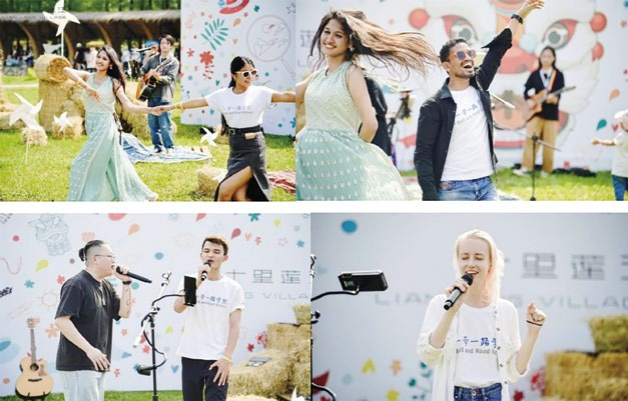
At the Grassland Music Festival, international students performed various cultural activities with enthusiasm. Their performance provided local villagers with a diverse cultural music experience. Throughout the festival, international students participated in cultural exchange programs with the villagers, which contributed to their further understanding of traditional Chinese music culture. Abdullaev, an Uzbekistan student, said, "By participating in these activities filled with a festive atmosphere, we had an awesome and unforgettable cultural exchange experience."
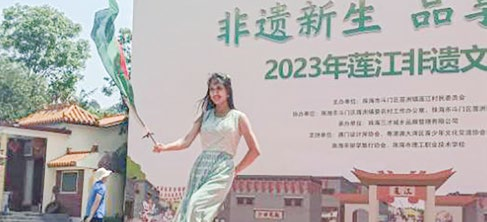
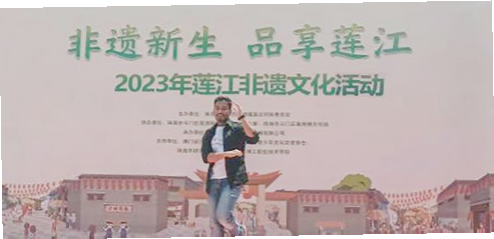
Lianjiang Village develops its cultural tourism on such resources as tourist attractions, cultural blocks, and cultural industrial parks to deeply embed intangible cultural heritage projects that are closely related to people's lives, and they conduct regular displays and performances. These projects can enable tourists to appreciate the elegance and charm of intangible cultural heritage during their visits, all of which shed light on rural revitalization to international students. In their field visit, students enjoyed a visual feast with various intangible cultural heritage performances, including the fire dragon dance, fireworks, cinemas and light shows. As they immersed themselves in these performances, they gained a deeper understanding of Chinese folk culture and the art of it. Nguyen Phuong Thao, from Vietnam, described this visit as "a fascinating exploration of Chinese rural culture."
The international students visited the Inheritance Institution of "Intangible Cultural Heritage" in Lianjiang Village. During the visit, they engaged in a symposium with local villagers and village officials and gained insights into the social-economic growth and rural revitalization efforts of the village. They also explored how intangible cultural heritage integrates with industries, festivals, tourism, education, technology, and people's livelihoods. In fact, Lianjiang Village strategically leveraged the significant geographic, traffic, ecologic, and cultural advantages of the Guangdong-Hong Kong-Macao Greater Bay Area. Capitalizing on these advantages, the village initiated the Lianjiang Research and Study Program. This program employs a "dual-teachers mode," involving both farmer teachers and research tutors in the teaching process and provides diverse class experiences geared to students of different age groups. The program not only broadened the horizons of international students, but also empowered them to discover a research-oriented tourism approach for rural development in their home countries. Inspired by Lianjiang Research and the Study Program, international students actively expressed their opinions, shared the development experiences of their countries, and offered suggestions for rural development.
-
Beijing · Haidian Campus:No.19 Xinjiekou Wai St, Beijing Normal University Jingshi School 2F, HaiDian District, Beijing, China
-
Zip Code:100875
-
Email:brs@bnu.edu.cn
-
Zhuhai Campus:No.18 Jinfeng Rd, Beijing Normal University Zhuhai Campus Liyun Building, Tangjiawan, Zhuhai City, Guangdong Province, China
-
Zip Code:519085
-
Email:brs@bnu.edu.cn
-
Beijing · Changping Campus:Gaojiaoyuan North 3 St, Changping Capmus Zone G Bldg 1, Changping District, Beijing, China
-
Zip Code:102299
-
Email:brs@bnu.edu.cn

Follow Us
版权所有 © 2022 北京师范大学一带一路学院

